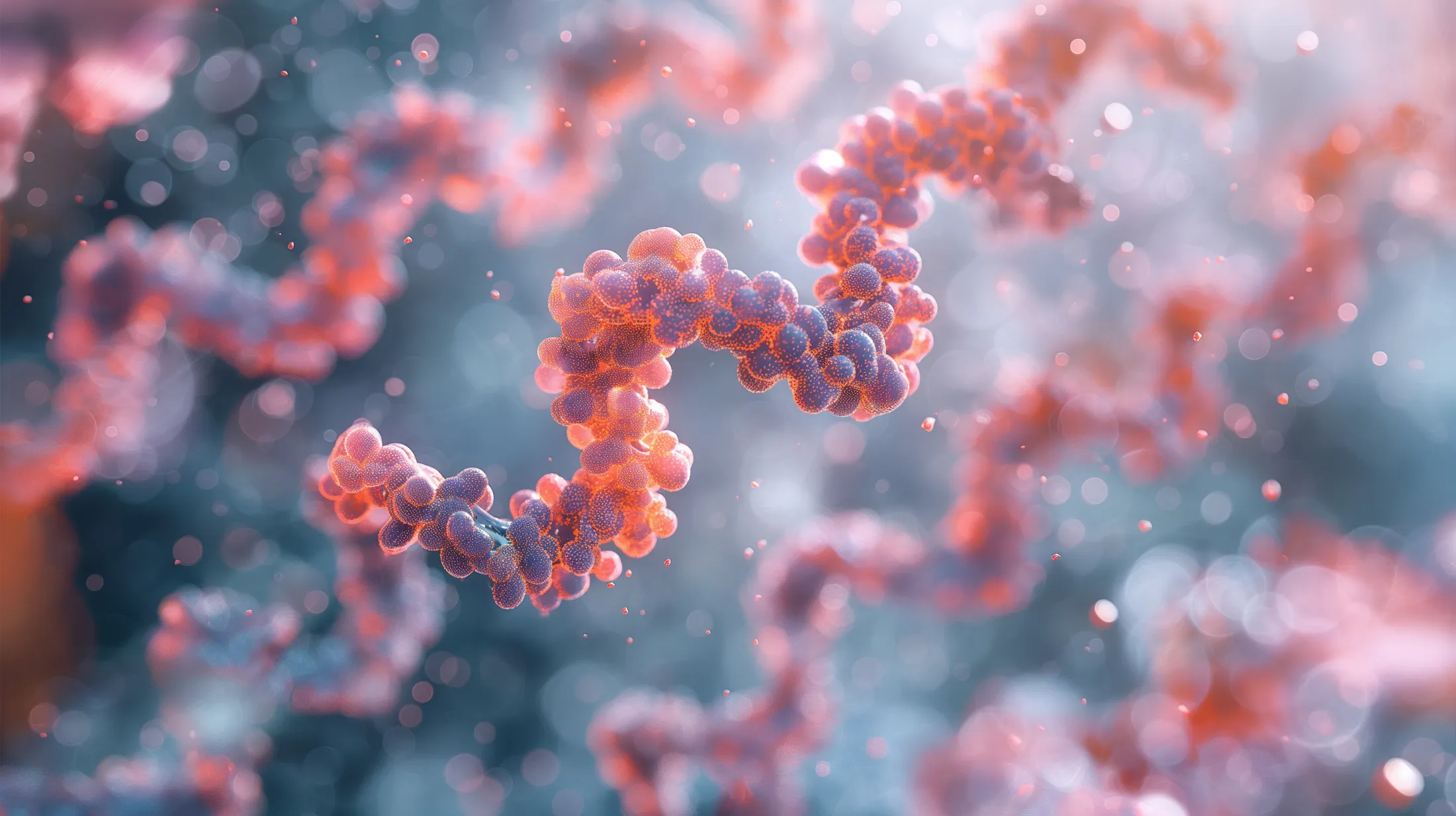
Tiny vesicles released by stem cells that carry signals between your cells. They're studied for tissue repair and immune modulation, and they're small enough to cross the blood-brain barrier.
By Jed Ryan, Founder and CEO · Reviewed by Adas Darinskas, PhD, Chief Science Officer · Published · Last reviewed

Exosomes are tiny vesicles that cells use to send signals to one another, the body's messengers. When they come from stem cells, they carry proteins, lipids, and RNA that tell other cells to repair, calm inflammation, and get back to normal function.
Because exosomes are small and carry no cells of their own, they can cross the blood-brain barrier, avoid many of the immune-rejection concerns of whole-cell therapies, and be produced and stored at scale.
Exosomes were once written off as cellular waste. Over the past decade research has shown they're actually one of the main ways cells communicate over distance, and that opens up real therapeutic potential.
When derived from MSCs under GMP conditions, exosome preparations carry a biologically active cargo and work through several routes:
At Innovita Clinic, exosome preparations are derived from high-quality stem cell cultures using GMP manufacturing protocols.

What exosome therapy does at the cellular level.
Small enough to reach neurological targets that conventional therapies struggle to access.
Targets inflammation in the brain and nervous system at the cellular signalling level.
Signals cellular repair across nerve, muscle, skin, and
connective tissue.
Instructs immune cells to calm overactive autoimmune
activity without broad suppression.
No living cells involved, which lowers the risk of rejection compared to
whole-cell therapies.
Enhances and extends the effects of MSC protocols when used in combination.
Explored across a broad spectrum of neurological, autoimmune, and tissue-repair conditions.
Exosomes' ability to cross the blood-brain barrier makes them one of the most promising areas of research for neurological conditions where conventional therapies have limited reach. Areas of ongoing study include:
The signalling cargo carried by exosomes can help calm overactive immune responses without broadly suppressing the system. This makes them a compelling area of research for:
Beyond disease categories, exosomes are being studied for their ability to accelerate healing, support skin and connective-tissue regeneration, and promote cellular repair broadly. Applications include:
Exosome research has grown quickly over the past decade, spanning studies in neurodegenerative disease, autoimmune conditions, cardiac repair, and wound healing. Explore the research and see where it stands.
Explore the ResearchFour steps from our first conversation to your treatment. We carry the complicated parts so you don't have to.
An exploratory conversation with Jed, for us to understand what you've been dealing with and how we can best help.
A Zoom consultation with Dr. Adas Darinskas and the medical team to look at your case honestly and talk through whether a regenerative protocol makes sense for you.
We build your protocol with Dr. Darinskas and his team, combining the therapies that fit your case and the goal you're after.
You receive treatment at Innovita Clinic in Vilnius, or at one of our partner facilities, wherever fits your case best. We work alongside you on scheduling and point you in the right direction for travel and accommodation.
Client stories and testimonials, coming soon.
We're gathering stories from clients who've been through exosome therapy. Check back soon, or reach out to talk with the team about client experiences.
Start the Conversation